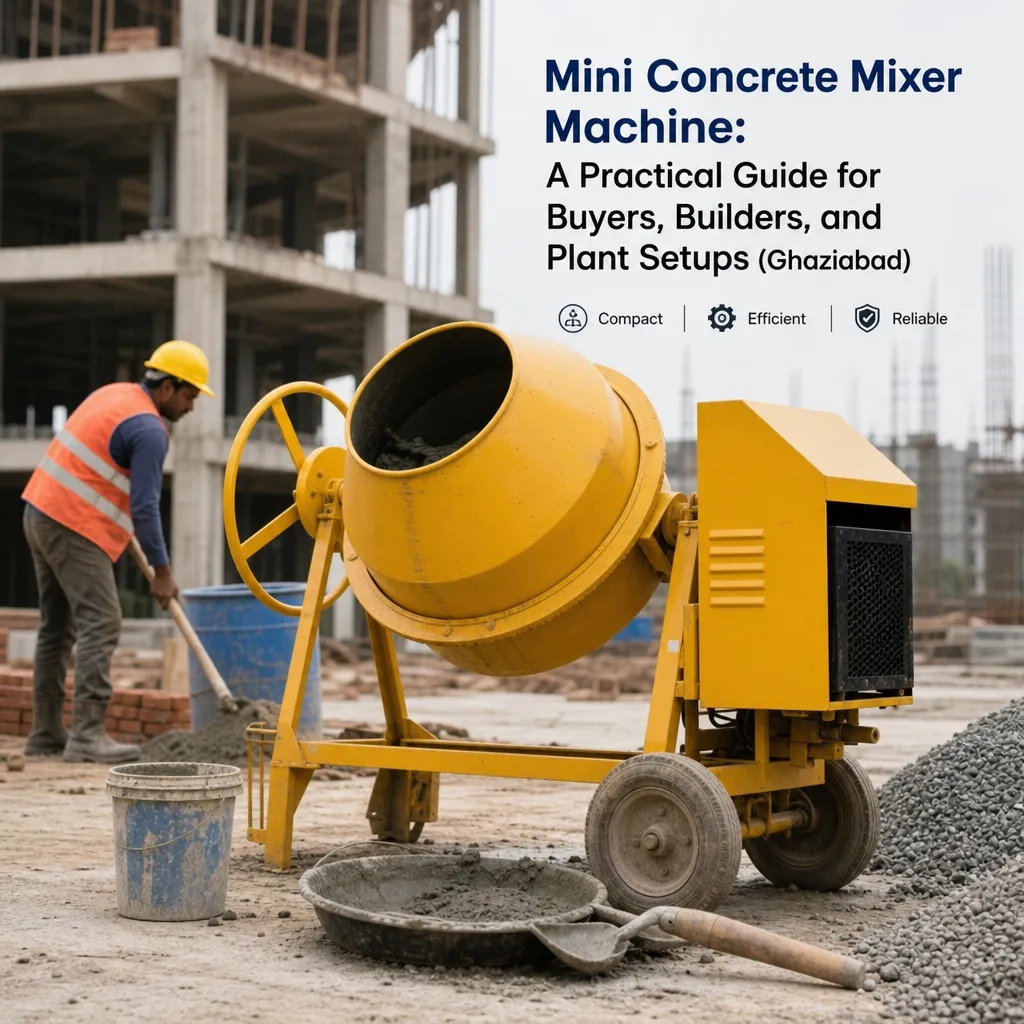
A mini concrete mixer machine is one of those tools that seems simple—until you have to choose the right capacity, power source, mixing method, and setup for your specific work. Whether you’re doing small foundation works, producing concrete for interlocking pavers, or planning a compact production area in Ghaziabad, the right mixer directly impacts quality, productivity, and cost.
This guide breaks down what matters most when selecting and using a mini concrete mixer machine, along with common mistakes to avoid and typical use cases.
---
What a Mini Concrete Mixer Machine Actually Does
A concrete mixer combines three basic components:
- Cement
- Aggregates (sand/gravel)
- Water (and sometimes admixtures)
The “mini” part usually refers to compact size, lower throughput, and suitability for small to medium batching requirements—often for on-site construction or compact production units.
Why mini mixers are popular
- Lower initial investment than large transit mixers or batching plants
- Easier installation in restricted spaces
- Faster setup for day-to-day construction schedules
- Suitable for smaller batch sizes (especially where continuity is more important than volume)
---
Key Features to Check Before You Buy
1) Drum capacity (and real batch output)
Capacity is usually measured in terms like 120L, 250L, 350L, etc. But the usable output per batch can be slightly less due to recommended fill levels.
Buyer tip: Ask/verify:
- What’s the maximum batch size you can run safely?
- How quickly can you complete a cycle?
- What’s the expected output per hour for your cement-aggregate mix?
2) Power source and motor specs
Mini mixers typically come in:
- Electric versions (most common for stable sites)
- Sometimes diesel/petrol options depending on mobility needs
You should confirm:
- Motor horsepower/HP or kW rating
- Voltage compatibility (important in many Indian industrial setups)
- Whether the mixer can handle stiffer mixes without overload
3) Mixing mechanism: pan vs. drum (and why it matters)
Most mini mixers fall into common mixing styles:
- Drum/tilting drum mixers: good for consistent concrete batching
- Pan or horizontal mixers (where applicable): often emphasize thorough mixing for certain material types
Important: Mixing style affects:
- Uniformity of concrete
- Workability (how easily concrete flows)
- Final strength consistency
4) Speed and mixing time
Concrete quality depends on adequate mixing. If mixing time is too short or drum speed too low, you may get:
- Poor cement dispersion
- Weak zones
- Higher rework or rejection
Rule of thumb: Always follow the manufacturer’s recommended batch time and mixing sequence for your mix design.
5) Water control (one of the biggest quality variables)
Mini mixers often struggle with consistency if water is added casually.
To improve quality:
- Measure water using buckets or a simple flow method
- Add water gradually during mixing (unless you have an exact batching process)
- Avoid adding water after the mix starts to stiffen
If you’re producing concrete for products like blocks or pavers, water consistency becomes even more critical.
---
How to Choose the Right Mini Mixer for Your Work
If you’re building small foundations or slabs
Choose a mixer that supports:
- Frequent batching
- Easy handling and quick turnaround
- Output that matches your crew’s placement pace
Avoid over-sizing—it can lead to wasted concrete if work slows.
If you’re producing concrete for masonry units or paver-style production
Your priority becomes:
- consistent mix quality across batches
- stable output rhythm
- ability to repeat the same mix over many hours
In such cases, a mini mixer is often part of a wider setup that includes material handling and molding/curing steps.
If you’re planning a compact plant space (local relevance)
In areas like Ghaziabad, many small contractors prefer equipment that can fit within:
- narrow plots
- semi-operational yards
- places where full batching plants aren’t feasible
That’s why compact “mini” mixers are commonly chosen alongside storage bins, aggregate handling arrangements, and product curing workflows.
---
Common Mistakes That Reduce Concrete Strength (Even with a Good Mixer)
Mistake 1: Overloading the drum
Overloading may save time, but it usually causes:
- incomplete mixing
- uneven cement distribution
- reduced compressive strength
Mistake 2: Inconsistent water addition
Concrete that looks workable at first may lose strength later due to excessive water or inconsistent mixing.
Mistake 3: Skipping proper mixing order
A typical reliable approach is:
- Start mixing dry aggregates (and cement if required by method)
- Add water gradually
- Continue mixing to reach uniform workability
(Exact sequence can vary by mixer type and mix design—follow the machine guidance for best results.)
Mistake 4: Using the wrong aggregate grading
Even the best mixer can’t compensate for:
- too much fine sand or too much coarse aggregate
- poor grading that affects workability and strength
---
Maintenance Checklist (Mini Mixers Don’t Stay Reliable by Accident)
A mini concrete mixer can run smoothly for years if basic maintenance is followed.
Daily/regular checks
- Clean the drum after work to prevent hard deposits
- Check bolts, motor alignment, and bearing condition
- Inspect the mixing blades for wear or damage
- Confirm electrical safety and cable condition (for electric units)
Weekly/monthly checks
- Grease moving parts as per schedule
- Verify gear/motor performance (unusual noise often signals issues)
- Calibrate batching tools (if you measure repeatedly by volume)
---
Mini Concrete Mixer Machine Use Cases You’ll Actually See on Site
- Casting small footings, boundary elements, and RCC segments
- Producing concrete for block/paver fabrication (where mix uniformity matters)
- On-site repair work and maintenance concreting
- Compact construction projects where staging a full batching plant is impractical
---
Why “Compact” Matters in Construction Workflows
A mini mixer isn’t just about size—it’s about tempo.
When your site needs:
- quick batching,
- manageable material handling,
- and predictable production cycles,
a properly selected mini mixer becomes the bridge between material storage and actual casting.
---
Local Example: Mini Mixer Options in Ghaziabad
If you’re in Ghaziabad and specifically looking for a compact solution, you may come across localized options such as the DIAMONDENGINEERINGGHAZIABAD mini concrete mixer machine, which is positioned for smaller batching requirements and on-ground usability.
(When comparing any machine locally, still verify capacity, motor rating, mixing time, and water handling consistency—those details decide the quality, not just the size label.)
---
Quick Buyer Checklist (Save This)
Before you finalize your mini concrete mixer machine, confirm:
- Drum capacity and usable batch output
- Motor rating and power compatibility
- Mixing mechanism and ability to handle your target concrete type
- Cycle time (output per hour) for your production needs
- Water measurement support (method/process stability)
- Maintenance access (easy cleaning + blade wear parts)
- Warranty/support and availability of spares locally
---
Final Thoughts
Choosing a mini concrete mixer machine is less about picking the biggest drum and more about matching the mixer to your batching rhythm, concrete consistency needs, and site constraints. Once those fundamentals align, you’ll notice improvements quickly: fewer rejected batches, better uniformity, and smoother casting schedules.
If you tell me your expected daily concrete volume (or your target product type—RCC, blocks, pavers) and your preferred power source (electric or diesel), I can help you narrow down what capacity and features are most suitable.
Keywords